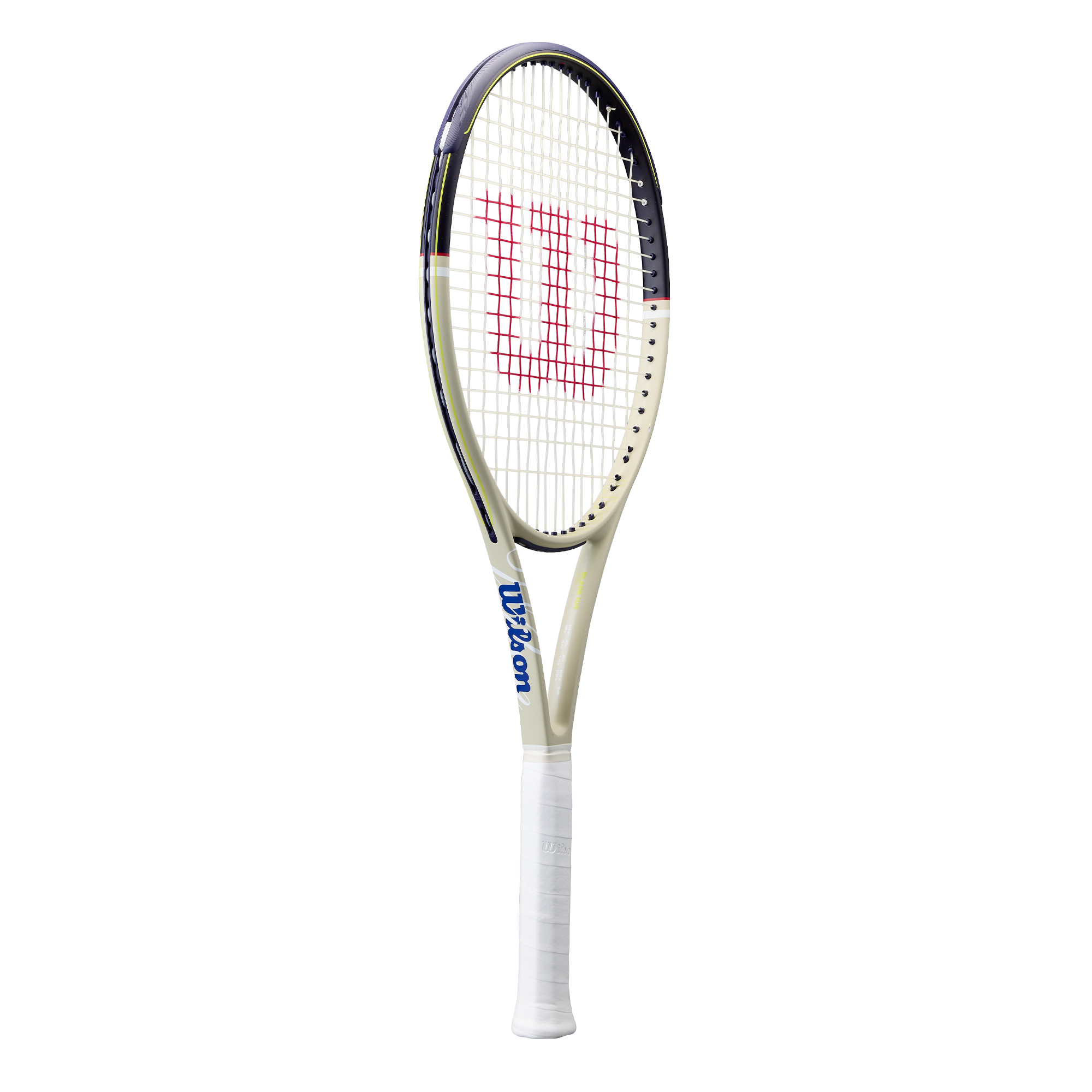
Look at the throat of your racquet. Most carry a recommended range in kilograms, pounds or both. Across the 150 frames we hold that figure for, the bottom of the range runs from 18.0 to 22.0 kg with a median of 21.0 kg, and the top from 24.0 to 29.0 kg with a median of 26.0 kg. That is the manufacturer's structural envelope — the frame is safe anywhere inside it.
The trade is simple and it does not change between players. A tighter bed gives you control and less power: the ball leaves faster and flatter, and the string bed does less of the work. A looser bed gives you power and comfort: it holds the ball a fraction longer, throws it further, and passes less shock into your arm. Everything else people say about tension is downstream of those two sentences.
A practical starting point: take the middle of your frame's printed range and move from there. If the ball is flying long, add a kilogram. If you are having to swing hard for depth, drop one. A kilogram is a noticeable step and a sensible one; changing three at once tells you nothing because you cannot tell which change did what.
Two adjustments that matter more than most advice on the subject. Polyester string is stiffer than nylon at the same tension, so a poly bed strung at the number you liked in multifilament will feel harsh and dead — drop roughly 2 kg when you switch. And if your elbow or shoulder is complaining, go softer, not tighter: the lower end of your range, in a softer string, is the single cheapest thing you can do about arm pain.
Our tension calculator does this arithmetic for a specific frame — it reads the head size, string pattern and stiffness we hold for it, adjusts for how you play, and drops the number again if you mark the comfort setting. It gives a starting point, not a verdict: the string bed you end up on is the one that felt right after a set.