Balance is measured from the butt cap to the point where the racquet sits level on a fulcrum. A 68.5 cm frame balancing at exactly 34.25 cm is perfectly even. Below that it is head-light, above it head-heavy. The figure is quoted unstrung, and stringing moves it a few millimetres towards the head.
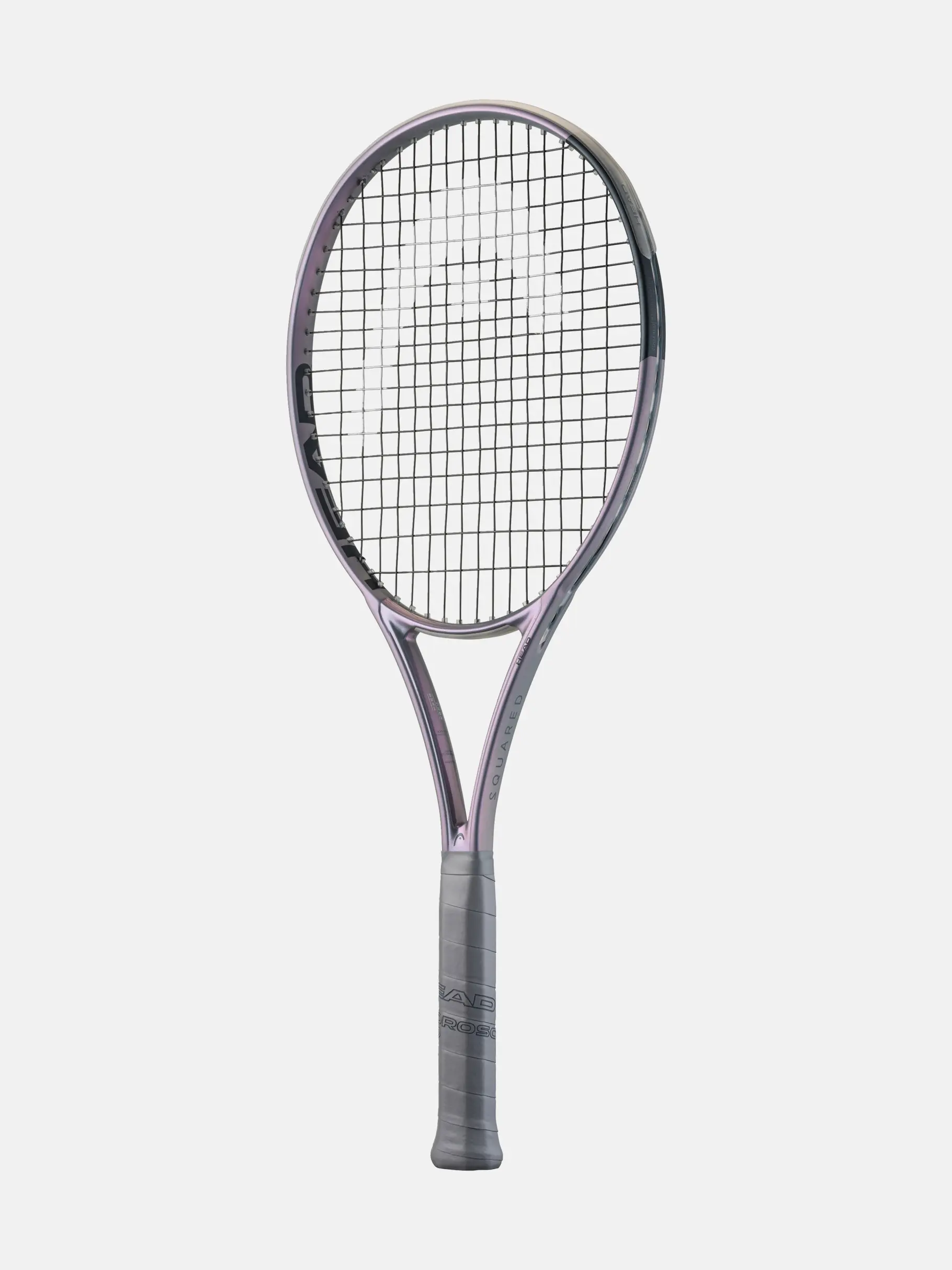
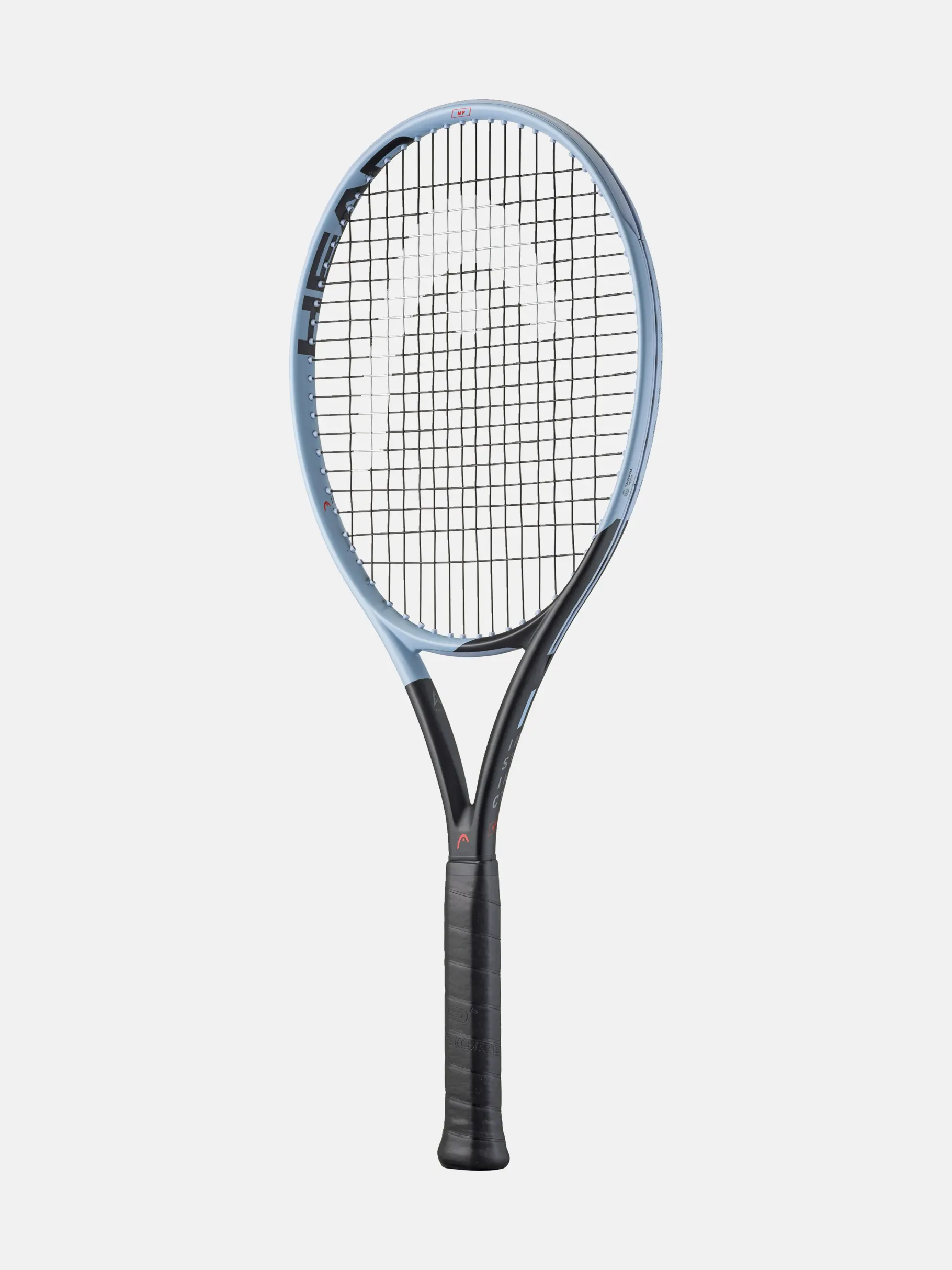
Across our 248 frames the range is 29.5 to 37.5 cm, median 32.0 cm. 147 of them sit under 32.5 cm — clearly head-light. 78 are between 32.5 and 33.4 cm. 23 are 33.5 cm or higher. The most head-light frame we hold is the Head Squared at 29.5 cm; the most head-heavy is the Head Instinct PWR 115 2025 at 37.5 cm.
What it changes. A head-light racquet is quicker to turn: easier at the net, easier to get out of the way on a fast return, less tiring on a long serving day. It asks you to supply the power. A head-heavy racquet carries mass out where the ball is, so it supplies power for you — and it is slower to swing, harder to volley with, and more punishing on the arm on an off-centre hit.
The pattern in the catalogue is not an accident: heavy frames are almost always head-light, and light frames are often head-heavy. Manufacturers use balance to give a light racquet some punch and to make a heavy one manoeuvrable. It is why the weight on the box tells you so little on its own.
Which to pick. If you play doubles, come forward, or find yourself late on returns, head-light. If you play from the back, take short swings, and want the ball to travel without extra effort, head-heavy. If you have no strong feeling either way, even balance in the 290–305 g band is where most club players are comfortable — and it is the densest part of this catalogue for that reason.