Photo will be added soon
8.5 SCORE
Soon
Soon
Soon
Soon
Prince · 2025

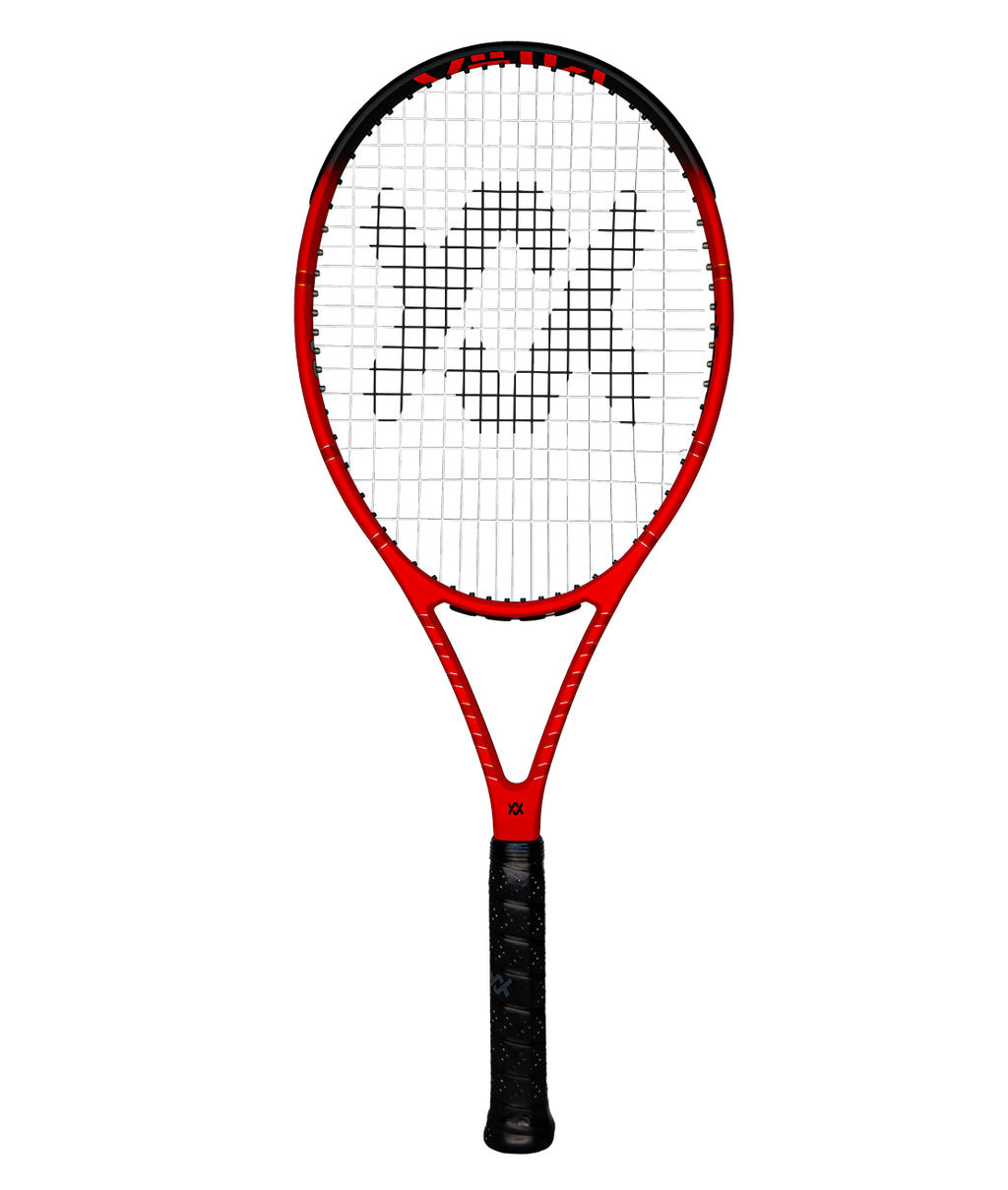
Phantom 100P (310 g)

100.0 · 310 · 31.5

TeXtreme graphite, thin flexible beam. 100 in² head, 310 g unstrung, 31.5 cm unstrung balance, 16×18 string pattern.

Verified specs
Specifications checked against the manufacturer's source on 2 Sep 2026.
€164.20 at Extreme Tennis

Where to buy

prices as we recorded them, not a live feed — each row says when
Extreme Tennis extreme-tennis.eu
€164.20 seen 2 Sep 2026
Visit shop

We link out to shops; we do not sell. Prices change — always check the shop's own page before buying. A shop marked partner pays us for the referral, and that arrangement never affects a score: scores follow from the specification alone.

Six criteria

calculated from the verified specifications, scored out of 10, shown against the category average
Power 8.6
Strong +0.3 vs category average
Free depth on a short swing
Calculated from 100 in², 310 g, 31.5 cm, 16×18 (spec model v1.0).
Control 8.3
Solid -0.1 vs category average
How closely the ball follows the aim
Calculated from 100 in², 310 g, 31.5 cm, 16×18 (spec model v1.0).
Spin 8.8
Strong +0.5 vs category average
Revolutions off the string bed
Calculated from 100 in², 310 g, 31.5 cm, 16×18 (spec model v1.0).
Stability 8.5
Solid +0.3 vs category average
Head hold against incoming pace
Calculated from 310 g, 31.5 cm, 100 in² (spec model v1.0).
Manoeuvrability 8.4
Solid -0.1 vs category average
Speed through preparation and recovery
Calculated from 310 g, 31.5 cm, 100 in² (spec model v1.0).
Not scored: Comfort. Its inputs — Stiffness (RA) · weight · head size — are not on file for this product yet. The overall score is the weighted mean of the 5 criteria that are. Send the figure with a source and it goes in.

Specifications

Head size (in²)100.0
Weight, unstrung (g)310
Balance, unstrung (cm)31.5
String pattern16×18
Length (cm)68.5

Where it wins and loses

against the average for this category
Strengths
Spin 8.8 — 0.5 above the average for this category (16×18, balance 31.5 cm).
Power 8.6 — 0.3 above the average for this category (100 in² head).
Trade-offs
No scores on file to read this from yet.
Best forA topspin baseliner who wins points with shape.
What matters most to you?
Power 8.6 #36 of the 248 we score on power

Above the average for this category, so this frame suits a player who wants depth without a full swing.

From 100 in² head.

Control 8.3 #128 of the 248 we score on control

Within 0.3 of the category average: neither a reason to buy this frame nor a reason to avoid it.

From 16×18, 100 in² head.

Spin 8.8 #5 of the 248 we score on spin

Above the average for this category, so this frame suits a topspin baseliner who wins points with shape.

From 16×18, balance 31.5 cm.

Stability 8.5 #33 of the 248 we score on stability

Within 0.3 of the category average: neither a reason to buy this frame nor a reason to avoid it.

From 310 g, balance 31.5 cm.

Manoeuvrability 8.4 #142 of the 248 we score on manoeuvrability

Within 0.3 of the category average: neither a reason to buy this frame nor a reason to avoid it.

From balance 31.5 cm, 310 g.

Read off this product's six criteria against the average for its category — the same numbers shown above, with the specification behind each gap named.

Proposal

Tension calculator

The calculator takes this frame's verified specs plus your playing style and returns a tension in kilograms and pounds, with the reasoning behind the number.

Racquet
Prince Phantom 100P (310 g)
Playing style
Chosen on the calculator screen
Get string and tension proposal
AI review

What the sources say

Medium confidence Full review →

The heaviest frame in this batch at 310 g, paired with an open 16×18 pattern — two specs that point at a deliberate, plough-through frame for players who supply their own racquet-head speed.

What the sources agree on

At 310 g unstrung this frame carries more mass than any other racquet reviewed here, and more static weight is the most direct, least-disputed lever for stability on off-centre contact — the 8.7 derived stability score, the highest of the ten, follows straight from that. The 16×18 pattern (fewer main strings than the more common 16×19) opens the string bed further still, typically reading as even more spin potential and a plusher feel than a 16×19 at the same tension, at some cost to string durability.

Where they disagree

Extra static weight only pays off for players who can generate their own racquet-head speed — the same mass that stabilises contact also has to be swung, and a slower swing won't feel the stability benefit as much as the spec sheet alone implies. RA and swingweight aren't published for this listing either, so the actual feel of that heavier build is still an open question rather than a settled one.
Tension guidance
No manufacturer tension range is published for this listing yet; we're leaving this blank rather than estimating one.

Written from the manufacturer's published specification, this product's own catalogue record, and the two derived bench measurements (stability, manoeuvrability) computed from those specs; not yet cross-checked against third-party owner or expert reviews, and the four hands-on criteria (power, control, comfort, spin) are still awaiting their own bench test. Generated by claude-sonnet-5 on 3 Sep 2026. Sources are weighted by recency and by whether the specification was verified on our bench.

Evidence base
verified_specs1
bench_derived_scores2
Six criteria
Power8.6
Control8.3
Spin8.8
Stability8.5
Manoeuvrability8.4

Similar products

nearest on head size, weight, balance and string pattern Open comparison table →

Usually used together

chosen by rule from this frame's own figures — we hold no purchase data